
Insulation facts
Not all insulation
is created equal.
Fiberglass batts and blown-in cellulose have their place — but they don't air seal, don't stop moisture, and don't last. Here's exactly how spray foam compares, line by line.
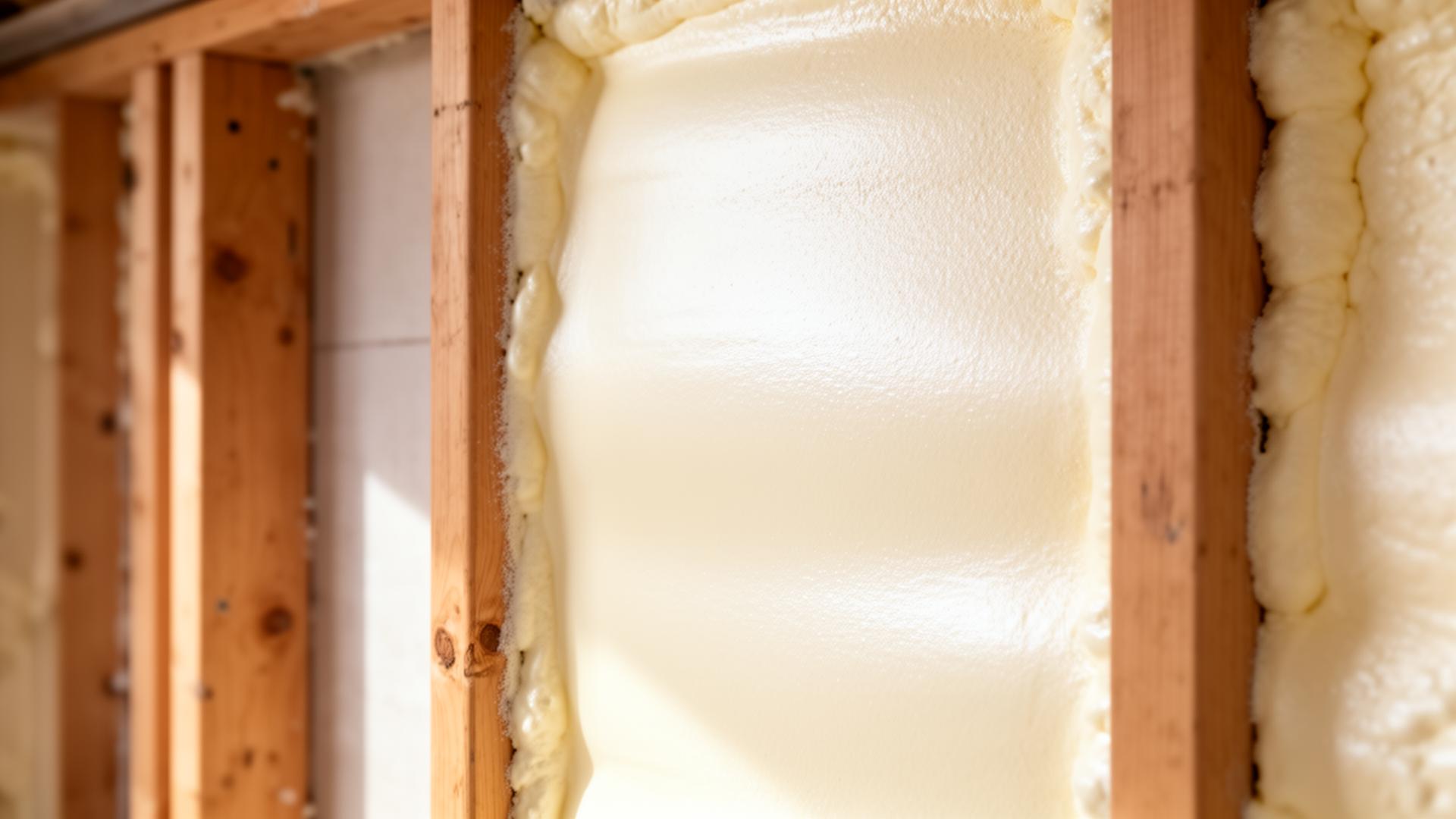
Air leaks — not poor R-value — are the #1 cause of high heating bills. Only spray foam seals every crack and seam.
More than 2x the thermal performance of fiberglass batts and most blown-in cellulose, in the same wall cavity.
Spray foam doesn't sag, settle, or absorb moisture. One install lasts the life of the building.
No re-blowing attics every decade, no replacing moldy batts. Spray foam is install-once-and-forget.
Side by side
Spray foam vs batt vs blown-in
Cheap up front. Expensive forever.
Batts rely on trapped air for R-value, but they don't seal gaps around studs, wires, or outlets. Up to 40% of conditioned air leaks right past them. Once they sag or get damp, performance drops fast.
Better than batt — still not sealed.
Loose-fill cellulose fills attic voids well but settles 10–20% over time, dropping its effective R-value. It absorbs water if your roof leaks, and it's a favorite nesting material for rodents.
Insulation + air seal in one pass.
Two-component foam expands to fill every crack and bond directly to the substrate. Closed cell adds structural rigidity and stops vapor cold. One install lasts the life of the building.
See your savings.
Run your project through our calculator to compare board feet, R-value, and material cost in 30 seconds.
Open Calculator